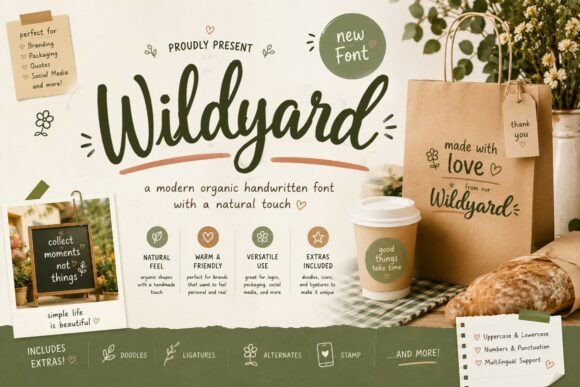
Wildyard: A Handcrafted Typeface for Authentic Branding
There’s a certain magic in a hand-drawn element. It feels personal, like a note from a friend or a sketch in a journal. In a digital landscape often dominated by sharp, sterile precision, that human touch can make all the difference. This is the heart of Wildyard, a modern organic handwritten font designed not just for legibility, but for connection. Inspired by the ethos of slow living and the warmth of handmade crafts, it offers a friendly, authentic voice for projects that need to feel genuinely human.
More Than Just Letters: Capturing a Feeling
Wildyard isn’t a formal script or a rigid serif font. Its visual character is defined by soft, imperfect strokes and a cozy, rhythmic flow. Think of the gentle curve of a baker’s handwritten recipe, the casual elegance of a wedding invitation drafted with care, or the playful, approachable text on a children’s product label. This typeface embodies that sensation. It’s a creative font that avoids the overly casual look of some handwriting styles, striking a balance between polished professionalism and heartfelt authenticity. For designers and entrepreneurs, this means you can use it to inject warmth into your brand identity without sacrificing a clean, professional presentation.
Where This Typeface Truly Shines: Practical Applications
The true test of a font is how it performs in the wild. Wildyard’s strength lies in its versatility across a wide range of creative and commercial projects. Its organic feel is particularly suited to industries where trust, comfort, and personality are key.
- Branding & Logo Design: For cafés, bakeries, wellness studios, or artisanal product lines, a logo set in Wildyard immediately communicates a hands-on, caring ethos. It’s a fantastic choice for brand names, taglines, or monograms where a personal connection is the goal.
- Packaging & Labels: On a jam jar, a candle box, or a bag of coffee beans, this handwritten font adds a layer of artisanal quality. It tells a story of small-batch production and attention to detail, enhancing the perceived value of the product.
- Editorial & Print Design: Imagine recipe book chapter headings, magazine pull quotes, or the titles in a wellness planner. Wildyard brings a tactile, engaging quality to print materials, making pages feel more inviting and less clinical.
- Digital Presence: Used thoughtfully in website headers, blog post titles, or as accent text, it can soften a digital interface. It’s also perfect for creating standout social media graphics for platforms like Pinterest and Instagram, where visual personality drives engagement.
- Special Occasions: Wedding stationery, party invitations, and event posters benefit immensely from its elegant yet approachable style. It sets a tone that is both celebratory and intimately personal.
Building a Cohesive Visual Language
Using a distinctive typeface like Wildyard effectively is about more than just swapping out your default font. It’s a strategic tool for building visual consistency and strengthening brand recognition. When your audience sees that familiar, friendly script across your logo, your Instagram stories, and your product packaging, it creates a cohesive and memorable identity.
However, readability is paramount. As a display font, Wildyard is best used for headlines, short phrases, and accent text rather than for long paragraphs of body copy. A common and effective approach in modern typography is to pair it with a clean, simple sans serif font. This contrast ensures your message remains clear while the Wildyard font handles the emotional and stylistic heavy lifting. For example, pairing it with a geometric sans serif for body text can create a beautiful balance between human warmth and digital clarity.
A Practical Guide to Implementation
Before integrating any new typeface into your workflow, a few practical steps can ensure success.
- Review the Full Character Set: Take time to explore the entire font file. Look at the alternates, ligatures, and stylistic sets often included in premium font packages. These extra glyphs can add unique flair and prevent repetitive letter shapes, making your typography feel even more custom.
- Test Extensively: Don’t just look at it on your screen. Test the font at various sizes you’ll actually use—on a business card mockup, a website header, and a social media post. Check how it renders on different screens and in print to ensure it maintains its charm and legibility.
- Understand the License: If you’re using Wildyard for commercial projects—a client’s branding, merchandise for sale, or paid digital products—confirm the font’s licensing terms. A clear commercial license is an essential design asset that protects both you and your client.
- Trust Your Project Goals: Does your brand need to feel cozy and nostalgic? Or modern and organic? The specific visual characteristics of Wildyard—the weight of its strokes, the spacing between letters—should align with the core message of your project. It’s a tool, and the best results come from using the right tool for the right job.
In the end, choosing a typeface is a creative decision that carries significant weight. A font like Wildyard offers more than just a set of characters; it offers a voice. For designers, small business owners, and content creators looking to infuse their work with a sense of authenticity, warmth, and human touch, it provides a versatile and compelling solution. It reminds us that in a world of pixels and vectors, the most powerful designs often feel like they were made by hand.