Why Acrid Is the Bold Display Font Your Brand Has Been Missing
You’ve felt it before—that nagging sense that your project’s typography is playing it safe. The headlines blend in, the logo feels generic, and the overall aesthetic lacks the punch needed to truly captivate an audience. For creators and brands aiming to make a memorable impact, settling for ordinary typefaces often means settling for ordinary results. This is where a specialized tool like the Acrid display font enters the conversation, offering a distinct voice for projects that demand to be seen and remembered.
The Anatomy of a Statement Typeface
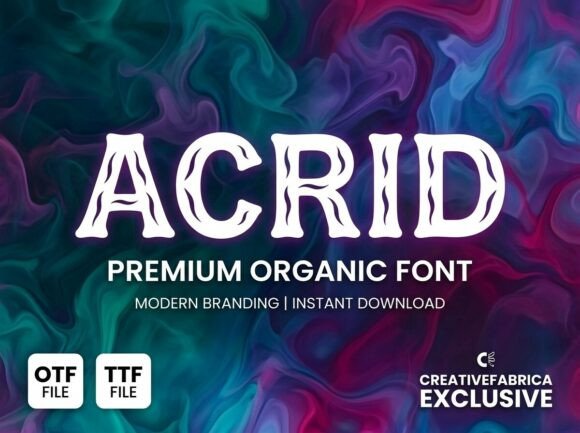
Acrid isn't just another font; it's a carefully crafted design asset built for centrality. Its character stems from strong, artistic letterforms that carry a modern yet timeless quality. Think of it as the typographic equivalent of a signature piece of furniture in a room—it immediately draws the eye and sets the tone. As an all-caps display typeface, its strength lies in its ability to command attention without shouting. The uniformity of capital letters creates a powerful, cohesive block of text that is ideal for headlines, logos, and decorative initials. This design choice ensures that every word set in Acrid feels intentional and substantial, providing a high-end, professional aesthetic that still brims with personality.
Where Acrid Truly Shines: Practical Applications
Understanding a font's personality is one thing; knowing how to deploy it effectively is another. Acrid excels in scenarios where visual impact is non-negotiable. For logo design, its strong character helps build instant brand recognition, making it a cornerstone of a cohesive brand identity. In packaging design, it can elevate a product on the shelf, communicating quality and uniqueness at a glance. The font is equally at home on social media graphics, where scroll-stopping power is essential, or on a website's hero section, where it sets the mood for the entire user experience.
Beyond digital realms, Acrid proves its versatility in print. It’s a natural fit for bold posters, impactful editorial layouts, and sophisticated merchandise. Imagine it on a tote bag, a business card, or the cover of a lookbook. For entrepreneurs creating digital products or marketing assets like email headers and ad banners, using a premium font like Acrid adds a layer of professionalism that builds trust with your audience. It’s a creative font that serves a strategic purpose, helping to improve visual consistency and brand recognition across every touchpoint.
Making Typography Work for Your Goals
Choosing the right typeface is a foundational design decision. It’s not merely about aesthetics; it’s about communication. The font you select should align with your project's goals and resonate with your target audience. A playful, handwritten font might suit a children’s brand, but it would undermine the authority of a financial advisor. Acrid, with its strong character and professional edge, is tailored for creators who want to project confidence, creativity, and a break from the ordinary. It’s the tool you reach for when the brief calls for something more than just readable text—it calls for a visual centerpiece.
A critical piece of practical advice is to always consider readability. As an all-caps display font, Acrid is engineered for short, high-impact text. It’s perfect for a five-word headline but would be challenging to read in a long paragraph. This is why it’s essential to pair it wisely. Combining Acrid with a clean serif font or a neutral sans serif font for body copy creates a balanced, professional hierarchy. This practice of font pairing ensures your design is both striking and functional, guiding the viewer’s eye effectively.
A Practical Guide to Your New Design Asset
When you integrate a new font into your toolkit, it’s helpful to review what’s included. Acrid comes as both an OTF and a TTF file. The OTF is ideal for advanced typographic features in professional software like Adobe Creative Suite, while the TTF ensures compatibility across various operating systems and applications, making it a reliable commercial font for any workflow.
Before finalizing any design, test the font in context. Set your actual headlines, not just "Lorem ipsum." View it at the size it will be used—whether on a tiny mobile screen or a large-format print. Check the spacing between letters (kerning) and lines (leading) to ensure it feels right. Also, always be mindful of licensing. Ensure the font's license covers your intended use, whether for a personal blog or a client’s global product launch. By taking these steps, you move from simply having a font to strategically using a powerful design asset that enhances your work’s professionalism and impact.