Letrial: A Typeface Forged in Steel and Light
Sometimes a design project demands more than just a clean set of letters. It needs a voice that feels heavy, grounded, and undeniably present. You encounter this when you are trying to create a brand identity for a high-performance automotive garage, a gritty streetwear label, or perhaps the user interface for a dystopian video game. In these specific scenarios, soft curves and delicate serifs feel out of place. You need a font that looks like it was stamped into sheet metal or etched into concrete. This is exactly the space where Letrial operates. It is a commanding industrial extended sans-serif typeface designed not just to be read, but to be felt. It anchors layouts with a sense of structural integrity, making it a powerful asset for any designer looking to project strength and technological precision.
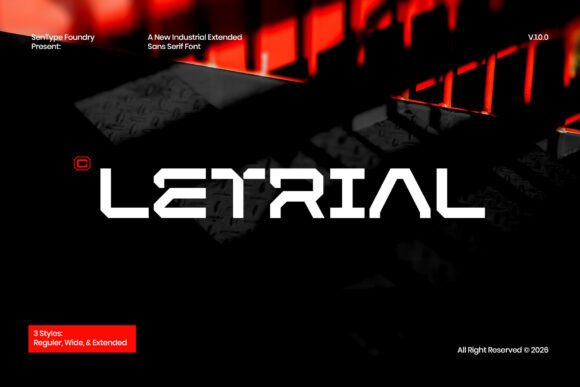
The defining characteristic of Letrial is its extended geometry. Unlike standard sans-serifs that fit neatly into compact squares, Letrial stretches horizontally, creating a sense of width and stability. This makes it incredibly effective for headers that need to span across a page or a screen without losing visual density. The typeface comes equipped with three distinct styles: Regular, Wide, and Extended. This variety offers supreme flexibility. You aren't locked into a single aspect ratio; instead, you can manipulate the width to fit the specific grid you are working with. Whether you are dealing with a narrow sidebar on a website or a massive banner for an electronic music festival, the font adapts to fill the space while maintaining its industrial soul.
Visualizing the Industrial Aesthetic
To understand the power of this typeface, imagine the environments it evokes. Picture the stark, architectural grids of brutalist buildings or the textured surface of industrial metal diamond plating. This is the visual language of Letrial. It thrives in high-contrast environments. For instance, placing Letrial against a moody, red-lit backdrop creates an immediate sense of premium power and tension, perfect for cyberpunk-themed artwork or aggressive marketing campaigns.
However, its utility goes far beyond niche genres. The "industrial" look has permeated mainstream design because it communicates efficiency and reliability. When a small business owner uses a font like Letrial for their logo design or packaging, they are signaling that their product is robust and well-made. It is an excellent choice for progressive athletic merchandise titles because it suggests movement and physical capability. For content creators in the tech space, using this font for video thumbnails or blog headers can instantly elevate the perceived value of the content, making a tutorial look more like a professional engineering log than a casual hobby project.
Practical Applications for Branding and Marketing
Choosing a font is a strategic decision that impacts how your audience perceives your brand. Letrial is particularly useful when you need to establish a modern, authoritative presence. Here are some specific ways you can integrate this typeface into your creative workflow:
- Logo Design: Because the font has such a strong silhouette, it works exceptionally well as a standalone logomark. The extended styles can create a unique shape that is instantly recognizable even at small sizes.
- Web Design and UI: If you are designing a landing page for a SaaS product or a tech startup, Letrial can serve as the primary display font. Its geometric clarity ensures that headlines pop off the screen, guiding the user's eye exactly where you want it.
- Social Media Graphics: In the fast-scrolling environment of Instagram or TikTok, you have milliseconds to grab attention. The heavy, wide stance of Letrial commands attention in quote graphics, sale announcements, and event promos.
- Packaging and Merchandise: For brands selling physical goods—whether it is coffee, skateboards, or hardware—this font translates beautifully to print. It looks fantastic screen-printed on t-shirts or embossed on boxes, offering a tactile quality that implies durability.
- Editorial Layouts: If you are working on a magazine spread or a PDF report, using the Extended style for pull quotes or section headers can break up the monotony of body text and add a dynamic visual rhythm to the page.
Mastering Typography: Readability and Pairing
While Letrial is a showstopper, it is a display font, which means it is optimized for impact at larger sizes rather than reading long paragraphs of body copy. This is a common characteristic of industrial and extended typefaces. The key to using it effectively is understanding its role in the hierarchy of your design.
For maximum readability and professional presentation, you should pair Letrial with a more neutral, legible typeface for your body text. A clean geometric sans-serif or even a classic serif font can provide a nice contrast. For example, if you use the "Wide" style of Letrial for your main headline, consider pairing it with a standard width, lighter weight sans-serif for the sub-headers and body copy. This prevents the design from feeling too heavy or claustrophobic.
When working with the different styles, test them in context. The "Regular" style is great for sub-headlines or buttons where space is limited but you still want that industrial feel. The "Extended" style is your heavy artillery—use it for splash pages, hero sections, or event posters where the text needs to dominate the composition. Always check the kerning (the space between letters) when using such bold, wide fonts, as the default spacing might need slight adjustments depending on the background texture you are using.
Choosing the Right License for Your Project
Before you download and install any new design asset, it is crucial to understand the licensing. Most premium fonts come with different tiers of licensing depending on how you intend to use them. If you are a freelancer designing a logo for a client, you need to ensure the license covers commercial use and allows the client to use the final logo indefinitely. If you are a developer incorporating the font into a mobile app or a website theme, you may need a specific web or app license.
Letrial is a commercial font, meaning it is designed for professional use. Before finalizing your purchase, review the terms regarding merchandise. If you plan to sell t-shirts or posters with the font embedded in the design, verify that the license covers physical goods sales. This due diligence ensures that your brand identity is built on a solid legal foundation, allowing you to scale your business without fear of copyright infringement issues down the road.
Ultimately, typography is the voice of your design. It sets the mood before a single word is read. Letrial offers a voice that is confident, modern, and structurally sound. It is a tool for creators who want to break away from the generic and build something that feels substantial and enduring. Whether you are launching a new tech brand or designing the cover for a sci-fi novel, this typeface provides the visual weight needed to make your message stick.