Goodness Matters: A Handwritten Font for Modern Creators
There's a reason handwritten fonts have become so popular in recent years. They carry warmth, personality, and an authenticity that polished typefaces sometimes struggle to convey. When you see a hand-lettered sign in a coffee shop or a script font on a wedding invitation, it feels personal—like someone actually took the time to craft something meaningful. That's exactly the energy that Goodness Matters brings to the table. Created by Kong Font Studio, this modern handwritten script font strikes a balance between playful charm and professional versatility, making it a solid addition to any designer's toolkit.
What Makes This Script Font Stand Out
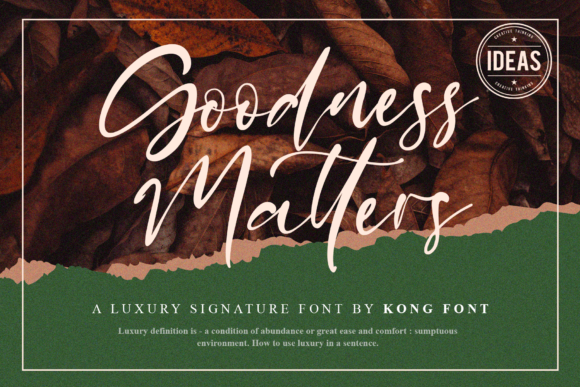
Goodness Matters isn't your typical cursive font that looks like it was pulled from a greeting card template. It has a contemporary, slightly whimsical feel that works across a surprisingly wide range of projects. The letterforms flow naturally, with just enough variation to feel hand-drawn without becoming illegible. Each character connects smoothly, and the overall rhythm of the typeface feels organic rather than forced.
One of the standout features is the extensive glyph and ligature collection. Because the font is PUA encoded, you can access every alternate character, swash, and decorative element without needing specialized design software knowledge. This means that even if you're working in basic design tools, you still get the full creative range. For crafters using Silhouette Design Studio or designers working in Photoshop, Illustrator, or Canva, the accessibility of these extras makes a real difference in how polished your final output looks.
The visual personality of Goodness Matters leans modern and approachable. It doesn't try to mimic vintage calligraphy or overly formal penmanship. Instead, it feels like something a talented friend might hand-letter on a chalkboard—confident, friendly, and unmistakably human. That quality makes it particularly effective for brands and projects that want to communicate warmth without sacrificing professionalism.
Where This Font Truly Shines
Let's talk about real applications, because a font is only as valuable as the projects you can use it for. Goodness Matters works beautifully in branding contexts, especially for businesses that want to feel approachable and creative. Think boutique bakeries, handmade jewelry brands, wellness coaches, lifestyle blogs, or independent coffee roasters. The handwritten style immediately signals that there's a real person behind the brand, which builds trust and connection with audiences.
For logo design, this typeface offers a strong foundation. It pairs well with clean sans serif fonts for contrast, which is a combination you'll see frequently in modern brand identity systems. Use Goodness Matters for the primary brand name and a simple sans serif for taglines or supporting text. This pairing creates visual hierarchy while keeping the overall look cohesive and readable.
Packaging design is another area where this font excels. Whether you're designing labels for artisan products, creating box graphics for subscription services, or mocking up product tags, the handwritten quality adds a tactile, crafted feel. It suggests care and attention to detail—exactly the impression most small businesses and product-based brands want to make.
Social media graphics benefit enormously from fonts with personality. In a crowded feed, a post that uses a distinctive script font like Goodness Matters can stop the scroll. It works well for quote graphics, announcement posts, sale promotions, and story overlays. Just be mindful of sizing—handwritten fonts tend to work best at larger sizes where the details of each letter are visible and impactful.
On websites and blogs, this font is best used strategically rather than for body text. Hero sections, pull quotes, section headers, and call-to-action buttons are all places where Goodness Matters can add visual interest without compromising readability. Pair it with a legible serif or sans serif for longer passages, and you'll have a typography system that feels both dynamic and functional.
Print materials like posters, flyers, invitations, and editorial layouts also benefit from this typeface. Event invitations—especially for weddings, baby showers, and milestone celebrations—feel more personal with a handwritten script. Editorial designers can use it for feature headlines or pull quotes to break up dense layouts and add visual breathing room.
For those creating digital products like planners, worksheets, or printable wall art, Goodness Matters offers that handcrafted aesthetic that buyers on platforms like Etsy and Creative Market gravitate toward. Merchandise design, including T-shirts, tote bags, mugs, and stickers, also pairs naturally with a font that feels handmade and expressive.
Practical Tips for Getting the Most Out of Your Typography
Choosing the right font style for your project starts with understanding your goals. A playful handwritten script like Goodness Matters is ideal when you want to evoke emotion, creativity, or a personal touch. It's less suited for technical documents, legal copy, or situations where maximum readability at small sizes is critical. Knowing when to use a script font versus a serif or sans serif is half the battle in effective typography.
Font pairing is where many designers—especially those newer to the craft—struggle. A good rule of thumb is to contrast styles without clashing. Goodness Matters pairs well with geometric sans serifs like Montserrat or clean serifs like Lora. Avoid pairing it with other decorative or script fonts, as this creates visual competition and makes text harder to parse. The handwritten font should be the star, with its partner typeface playing a supporting role.
Readability deserves serious attention. Handwritten fonts are expressive, but they can become difficult to read at small sizes or in long strings of text. Use Goodness Matters for headlines, short phrases, and display text rather than paragraphs. If you're using it on a website, test it across multiple screen sizes to ensure the letterforms remain clear on mobile devices.
Take time to explore the included font styles and alternates. Many users download a font, use the default characters, and never discover the swashes, ligatures, and alternate letterforms that can elevate their designs. With PUA-encoded fonts like this one, accessing those extras is straightforward, and experimenting with them can transform a basic layout into something that feels custom and intentional.
Finally, pay attention to commercial licensing. If you're using Goodness Matters for client work, merchandise, or products you intend to sell, make sure your license covers that use. Creative Fabrica, where this font is available, offers clear licensing terms, but it's always worth confirming that your intended use aligns with the license you've purchased. This protects both you and the font creator, and it's a professional habit worth building early.
Building a Cohesive Visual Identity
Typography is one of the most powerful tools for building brand recognition. When your audience sees consistent font choices across your website, social media, packaging, and marketing materials, they begin to associate those visual elements with your brand. Goodness Matters can serve as a signature element of your visual identity—something that makes your content instantly recognizable even before someone reads the words.
The key is consistency. Choose two or three fonts that work well together and commit to using them across all your touchpoints. Use Goodness Matters for your primary display needs, pair it with a complementary sans serif or serif for body text, and stick with that system. Over time, this consistency builds familiarity, and familiarity builds trust.
For content creators and marketers, this font also supports audience engagement. People respond to visuals that feel human and approachable. A handwritten script on a social media post or email header feels less corporate and more conversational, which can increase interaction rates and make your audience feel more connected to your message.
Whether you're a seasoned designer looking for a fresh script font, a small business owner building your first brand identity, or a crafter working on personal projects, Goodness Matters offers a versatile and visually appealing option. Its modern handwritten style, accessible glyph set, and compatibility with popular design tools make it a practical choice for a wide range of creative applications. The font doesn't just look good—it works hard across the kinds of real-world projects that demand both beauty and function.