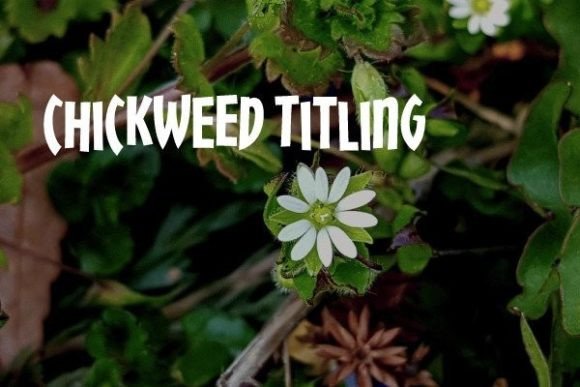
Chickweed Titling: The Display Font for Playful, Space-Saving Headlines
There's a specific kind of challenge that comes with designing a header for a product label, a social media graphic, or a blog banner. You need the text to be impactful, to convey a certain personality, and—very often—to fit into a tight space without looking crammed or losing its charm. Many decorative fonts are beautiful but sprawling, making them impractical for real-world layouts. This is where a typeface like Chickweed Titling enters the conversation, offering a solution that balances distinctive style with practical utility.
At its core, Chickweed Titling is a display font designed for moments that need a touch of personality. Its letterforms are crafted to be both engaging and compact, making it a go-to choice for creative projects where headline real estate is limited but impact is non-negotiable. Whether you're a small business owner designing product packaging, a content creator crafting thumbnail images, or a marketer developing ad copy, this font aims to make your text pop without overwhelming the visual space around it.
A Typeface with a Friendly, Artistic Vibe
What sets Chickweed Titling apart visually is its blend of simplicity and subtle flair. It often features gentle curves, slightly irregular baselines, or hand-drawn qualities that give it a warm, approachable feel. Unlike overly ornate scripts that can sacrifice readability, this font maintains clarity while still conveying a sense of creativity and casual elegance. It’s the kind of typeface that feels suited for a boutique bakery’s menu, a handmade jewelry brand’s hang tag, or a lifestyle blog’s featured image. It speaks to audiences who appreciate authenticity and a personal touch in design.
One of the most practical features for designers is that Chickweed Titling is PUA encoded. For those who aren’t deeply versed in typography, this simply means that every glyph, swash, and stylistic alternate is easily accessible through standard character maps in design software. You don’t need advanced OpenType panel knowledge to use its full range of decorative elements. This accessibility makes it a versatile design asset, especially for creators who want to experiment with different looks quickly.
Practical Applications Across Creative Projects
The real value of any font is measured in how it performs in context. Chickweed Titling’s space-efficient design makes it particularly useful across a variety of applications:
- Branding & Logo Design: For businesses targeting a friendly, approachable audience, this font can serve as the primary logotype or a supporting headline font. Its unique character helps with brand recognition, especially in crowded markets like artisanal goods, wellness brands, or creative services.
- Packaging Design: Space is always at a premium on product labels and boxes. Chickweed Titling allows you to create clear, attractive headers for product names or key messages without needing to shrink other essential information like ingredients or instructions.
- Social Media Graphics: Platforms like Instagram and Pinterest favor bold, concise visuals. Using this font for quotes, announcements, or sale promotions can help your posts stand out in a fast-scrolling feed, improving audience engagement through stronger visual appeal.
- Websites & Blogs: While not for body text, it can be used effectively for blog post titles, section headers, or call-to-action buttons to inject personality into a web design and break up monotonous layouts.
- Print & Merchandise: From invitations and posters to tote bags and mugs, the font’s legibility at various sizes makes it suitable for print materials and merchandise where a casual, creative tone is desired.
Enhancing Your Design Workflow and Final Output
Integrating a font like Chickweed Titling into your workflow is about more than just downloading a file. To truly leverage its potential, consider these practical steps:
First, always review the included font styles. Many premium fonts come with a family of weights or styles (e.g., regular, bold, italic). Understanding what’s included helps you plan your typographic hierarchy. You might use a bolder weight for a main headline and a lighter weight for a subheading, creating visual consistency across a project.
Second, test font pairings. Chickweed Titling, with its decorative nature, typically pairs well with clean, neutral sans-serif or serif fonts for body text. For example, pairing it with a simple sans-serif like Montserrat or a classic serif like Lora can create a balanced, professional presentation that doesn’t overwhelm the reader. The key is contrast—let the display font do the heavy lifting for personality, and let its companion handle readability for longer text.
Third, be mindful of readability considerations. While it’s designed for headlines, always test your chosen text at the intended size and in the intended context. A phrase that looks great on a large poster might become difficult to parse as a tiny website button. Ensure there’s enough contrast between the text color and its background.
Finally, if you’re using it for commercial work, double-check the licensing terms. As a commercial font, Chickweed Titling’s license likely covers use in client projects, digital products for sale, and merchandise. Confirming this upfront protects you and your clients and is a standard part of professional practice.
Choosing the Right Tool for the Job
Typography is a fundamental part of visual communication, and selecting the right font is a strategic decision. It’s not about finding the most beautiful typeface in isolation, but about finding the one that aligns with your project’s goals, audience, and medium. Chickweed Titling offers a specific blend of charm and practicality. It’s for the moments when you need to be heard quickly and pleasantly, when your headline needs to feel as thoughtfully crafted as the product or message it represents.
Ultimately, great design is about solving problems. A font that helps you communicate more effectively, that fits beautifully within your layout, and that resonates with your intended audience is a valuable tool. By understanding its strengths and applying it thoughtfully, you can enhance the clarity and impact of your work, one headline at a time.